
Interview — Nikolina Nedeljkov, Visiting Professor of Academic Writing, International College Beijing, China Agricultural University
Academic writing professor Nikolina Nedeljkov on the real challenges non-native English speakers face in academic publishing and why human editing matters.
Radomir Grcic
6/12/20263 min read
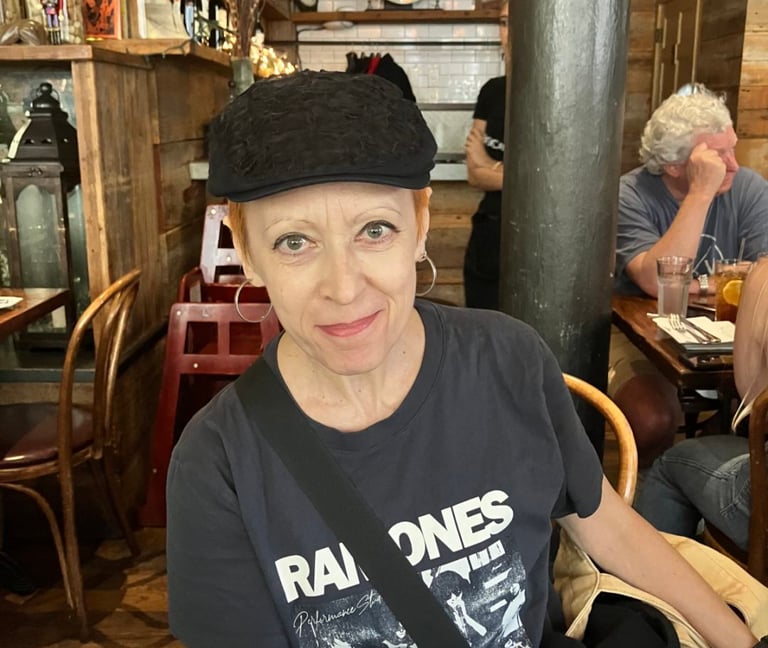
Nikolina's path into the world of academic English is one shaped by movement across borders, languages, and institutions. She completed her undergraduate and master's studies in English at the Faculty of Philosophy, University of Novi Sad, and spent a semester at the Institute Inostrannykh Yazykov Imeni Morisa Toreza in Moscow before returning to Serbia. After finishing her studies, she started teaching at the Department of English before making the leap to New York, where she earned her PhD in English from the Graduate Center, CUNY. For 10 years she taught writing and composition at Baruch College and Queens College, working daily with both native and non-native English-speaking students. She then returned briefly to Serbia before taking up her current position as Visiting Professor of Academic Writing at the International College Beijing, China Agricultural University, where she has been based since 2022.
What makes Nikolina a particularly compelling voice on the subject of language barriers in academic publishing is that she has lived the experience herself. As a non-native English speaker who built an entire scholarly career in the United States, writing, publishing, and teaching at the highest level, she understands the challenges that non-native English speakers might face. Now, working with Chinese researchers who face that same challenge, she occupies a rare vantage point as witness, practitioner, and guide all at once.
1. You specialized in English Language and Literature in Novi Sad, then moved to New York to do your PhD at CUNY. Even as someone for whom English was a professional choice rather than a barrier, what was it like adapting to American academic culture?
It took some time to adjust to the new environment, yet it went rather smoothly, somewhat like a homecoming to the original context of the culture and language that, prior to my arrival there, I had been exploring only remotely. My academic experience, alongside my interests, had prepared me for the new environment, but even that could not and cannot, it seems to me, eliminate the moment of the shift to the new cultural milieu.
2. In your years of working with non-native English-speaking researchers and students, have you observed cases where language proficiency influenced how their academic work was received or evaluated?
I have not directly, but I saw some published works that call for attention. What I do know is that students are increasingly trying to circumvent that predicament by using AI, which, needless to say, imposes an additional, troubling, aspect on educational practices and academia generally
3. You have taught Composition, Academic Writing, and Writing courses across very different contexts, New York, Novi Sad, Beijing. In your experience, what makes the biggest difference for non-native writers trying to improve their academic English?
I’m not sure if you can put your finger on a single component as crucial. It rather works holistically. Syntax and grammar are definitely obstacles, but so are collocations, idioms, wording generally. Stylistic mismanagement resulting from linguistic and cultural differences is also common, I’d say.
4. Is there anything international journals could do better when it comes to supporting non-native English-speaking researchers?
Offering editorial services comes to mind, but this is already part of what many of them already adopted as the mode of operating. The problem is, I’d assume, that the services they charge for might not be available to those who cannot afford it, while those offered for free might not be comprehensive or substantial enough to significantly improve the quality of writing.
5. Quillcademia insists on human-only editing, with no AI involvement. From your experience as both a writing teacher and a researcher who has worked across languages, do you think that distinction matters in academic writing, and if so, why?
I absolutely do. AI generated text strips from writing the authenticity of the author’s voice, and I don’t mean merely that it is not authentically their work, but it is robbed of the peculiar idiosyncrasies that constitute the author’s authentic voice. In addition, it may lead toward the uniformity of expression that annihilates the human signature individual characteristics, and I do not think such a situation benefits us, even in sciences where the emphasis is on disinterested, empirically, statistically, and objectively based information. In the humanities, there is perhaps more room for stylistic variants, not including arbitrariness, however.
Photo by Nicholas Birns
Professional Human-Only Academic Editing Services for Researchers Worldwide
© 2026.
All rights reserved.